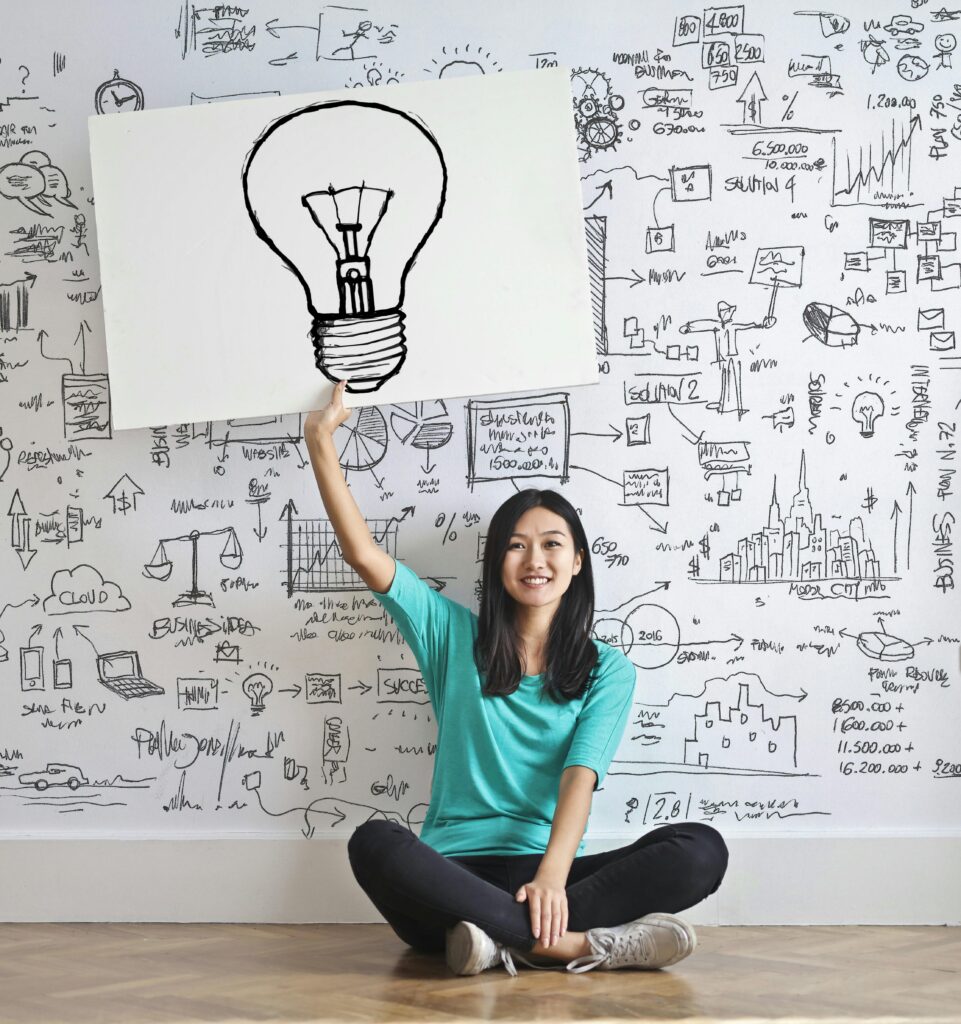
We take science out of the ivory tower
Science to Society
How we work
About Science to Society
At our core, we are a collective of scientists united by curiosity and purpose. We explore complex societal challenges through a cross-disciplinary lens—connecting insights from technology, psychology, and the social sciences. By weaving together knowledge from diverse fields, we uncover the hidden problems that only become visible at the intersections of disciplines.
Our work begins with listening: through interviews with professionals and citizens alike, we identify the frustrations, inefficiencies, and unmet needs that shape people’s daily lives. When these issues affect large parts of society, we turn them into action-driven research topics.
The insights we generate are shared directly with those who can drive real change—policy makers, political institutions, and businesses. When progress depends on public awareness or behavioral shifts, we translate science into accessible, impactful tools such as apps and digital platforms, designed to inform, educate, and gently guide positive change.
We believe science shouldn’t stay behind closed doors—it should live and breathe in the real world. Our mission is to bridge the gap between research and reality, turning knowledge into action for society.

Projects
We always work on several projects at the same time. Below you can find short summaries per project. When we have gathered enough information we create a page per project to share the gained knowledge and tracktion in our society that followed from it.
Support with grief
Happy Again!
For this project we started with researching existing grief tools and technology that are available for people that want or have to work on their grief at home. Therapy for grief is not reimbursed in the Netherlands until someone develops depression or anxiety and has tried to recover for at least half a year on their own. To improve our society we have created a team of companies and university professors to build an online platform to help people in this first period of grief.
Via discussions with many therapists and counsellors and reading a lot of literature, we found out that good social support and correct emotion regulation are correlated with lower depression and anxiety rates, yet there are currently no therapeutic modules for these skills in grief interventions. Therefore, we will create an app, and therapeutic modules, that will help people to strengthen their social connections by reshaping the relationships with the people in their own environment by teaching the saddy and the supporter how to talk to each other about tough emotions and grief.
Funded by AI spark at EWUU and by the Center for Unusual Collaborations at EWUU. Involved organisations: TU/e, WUR, UU, UMCU. Involved organisations: Leiden University, Universitair Medisch Centrum Utrecht, Eindhoven University of Technology, Wageningen Universiteit & research, Tilburg Universiteit, Universiteit Utrecht, 8D, StS, Live love lose, Jet Crone praktijk
Stronger social connections for grief
Teaching the saddy and the supporter to how to talk to each other about grief and difficult topic, and to take steps together to recover from the loss and become happy again!
First prototypes for grief app features
Several low fidelity prototypes have been created thus far and we are taking steps to fund the next step towards a working prototype.
Evolved emotion regulation for grief
Through explanations about emotions, how to deal with these emotions and guided exercises people will learn to regulate their emotions in new ways.
Data privacy and data ownership for empowerment in mental health
At the moment it is very normal to lose track of all personal data that is collected through apps on one’s phone or tablet. Often the data is sold to other companies and through targeted marketing people are influenced on economic and political values. However, this economic system is not necessary for an online product to survive.
We are investigating and showing through a technological tool how this data ownership can be turned around and how privacy of data can be placed back in control of clients of health apps. Having control and overview of one’s own mental health progress can support the journey of recovery and empower people on their own path to mental health.
Funded by the Center for Unusual Collaborations at EWUU. Involved organisations: TU/e, WUR, UU, UMCU
Baby sleep and daycare operationalisation
A well-rested parent is a parent that can join our society and contribute to the labour force. However, our research into parents’ sleep patterns and children at daycare indicates in findings that currently the structure of daycare day planning does not allow parents to sleep well in the first 8 months of their child’s life.
We are in the phase of observations to see if these principles are carried widely across the Netherlands and across all types of daycares.
If you are a parent and want to contribute your data to our project, we are very happy to receive the statistics you have kept on the sleep times and feeding times etc of your baby. Submit your intent here to see how you can help our project with your data.
Yes, I would like to share my baby data with you (your data will be handled anonymously in the analysis):
Mental health and the transition to plant based meat replacers
For sustainability reasons we are trying to have the Dutch population eat more plant based protein sources instead of animal based protein sources. However, the current plant based meat replacers are not yet balanced in essential proteins. Essential proteins are needed to create the neurotransmitters for our brains. Several important neurotransmitters can only be obtained through the food we eat, like for instance tryptophan. Therefore, every meal should contain a balanced protein profile to keep your bodily processes running smoothly. Many mental health and physical health condition are correlated with poor essential protein intake, therefore we are shedding light on the potential human health benefits that can be gained from focussing on meals with a well balanced protein palate.
We are investigating what is needed to support the food industry to transition to healthy plant based products that increase mental health and thereby improve the mood and health of people in our society.
Furthermore, we are investigating how we can improve Ultra Processed Foods (UPFs) to have more healthy designs for your brain. Currently, many products have a very limited amounts of proteins, due to the products getting a lot of added sugar and fat from other food sources. This causes your body to crave more proteins while becoming fat due to the products being low in proteins, yet high in energy. Your body does not store the proteins but it does store the fat and sugar. And the craving for proteins continues. This leads to a cycle of eating too much of unhealthy UPF products. By integrating science on animal food and human food we intend to uncoverhow we can stop the obesity pandemic.
Funded by the Center for Unusual Collaborations at EWUU. Involved organisations: TU/e, WUR, UU, UMCU, UvA, RIVM
Mental state improvements
Unlocking abilities


Gifted people
Early detection of high potential in individuals so people’s mental powers can be fostered and ignited to benefit our society
Gifted people think in different ways than the average person. Their brains are wired in a way that allows them to perceive and process more information from the environment. This leads to these people being better at seeing patterns, and to being better at thinking in systems. This gives them a higher ability to solve complex problems, makes them more sensitive to issues, and allows them to be more creative. These are talents that are very useful to society!
However, in Dutch society people often remain unaware of their IQ scores and consequently of their special abilities to think differently. The potential of our society remains under-used while these people tend to be the ones that start new companies which create new jobs for many people. Moreover, they tend to improve existing companies by making them more efficient, which frees time, energy and money for other activities and services.
Unfortunately, currently, there is no high IQ detection in daycares, primary schools, high schools, or universities. We are investigating how gifted people can be detected at early stages in their life and consequently be facilitated on their learning journey to become the changers and problem solvers of our future society.
Changing lives through science
We help our society to prosper and advance in issues that only come to light when multidisciplinary views are taken on to investigate our problems.